



 Xplorely
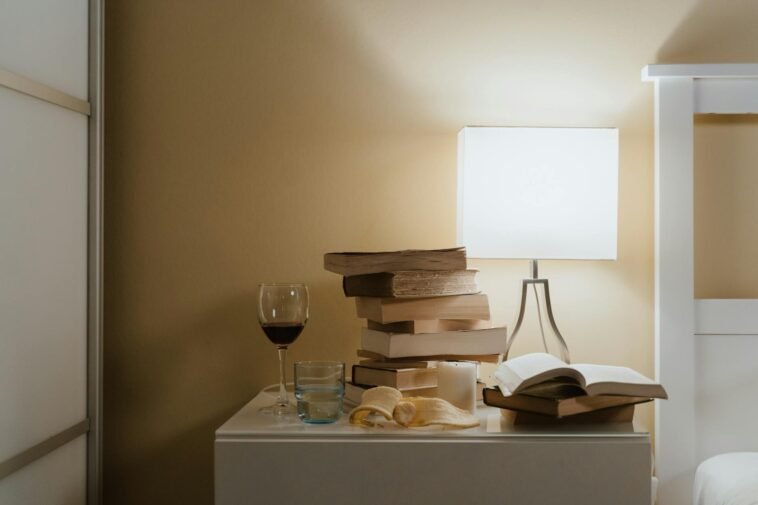
Okay, real talk: for years, I was a total night owl, but not in a good, productive way. I’d be wired, scrolling, and then crash into bed, only to stare at the ceiling for an hour. I’d tried all the usual suspects — no caffeine after noon, cutting out screens, even a whole parade of expensive sleep supplements that did… well, nothing much. But then I started really digging into light, specifically the amber light bulb, and honestly, it changed everything for me. This isn’t some woo-woo wellness trend, it’s pretty solid science, and once I got my home setup dialed in, my sleep quality just rocketed. I’m talking falling asleep faster, staying asleep longer, and waking up feeling actually rested. It’s wild, and I want you to know exactly how I did it.
📋 In This Article
- Why Your Regular Lights Are Sabotaging Your Sleep (And Mine Too, For Ages!)
- Okay, So What Exactly *Is* Amber Light and Why Does It Work?
- My Exact Amber Light Bulb Setup: Brands, Wattage, and Where I Put Them
- My Evening Routine: When I Flip the Switch to Amber and Why It Matters
- What About Other Rooms? My Compromise Zones and When to Break the Rules
- What Doesn’t Work (Or Is Overhyped) When It Comes to Amber Lighting
- Maintaining the Glow: Cleaning, Longevity, and Doctor’s Orders
- ⭐ Pro Tips
- ❓ FAQ
Why Your Regular Lights Are Sabotaging Your Sleep (And Mine Too, For Ages!)
Look, we’re all pretty much bathed in blue light these days, aren’t we? From our phones to our laptops to the bright LED overheads in our homes, it’s everywhere. And while it’s great for keeping us alert during the day, it’s a disaster for our sleep at night. Here’s the thing: blue light, especially the kind emitted from most modern electronics and standard white light bulbs, tells your brain it’s daytime. It suppresses melatonin production, which is that crucial hormone your body needs to feel sleepy and drift off. My old living room, with its bright, cool-white LEDs, was essentially a giant alarm clock for my brain after 7 PM. I didn’t even realize it was happening, but my body was constantly getting mixed signals. It’s like trying to fall asleep with someone blasting a foghorn, but the foghorn is invisible light waves. It’s no wonder I was struggling.
The Melatonin Sabotage: A Quick Science Bit
Your body’s natural sleep-wake cycle, called your circadian rhythm, is heavily influenced by light. When light hits your eyes, particularly blue wavelengths, it signals to a part of your brain called the suprachiasmatic nucleus (SCN) that it’s daytime. This SCN then tells your pineal gland to pump the brakes on melatonin. So, if you’re exposed to bright blue-rich light in the evening, your body isn’t getting the memo that it’s time to wind down. You’re literally fighting your own biology, and trust me, biology usually wins.
The Sneaky Culprits: Beyond Your Phone Screen
Everyone talks about phone screens, and yeah, they’re a big one. But don’t forget about your regular light bulbs! Most standard LEDs and even some fluorescents emit a significant amount of blue light. Kitchens, bathrooms, living rooms – if they’re brightly lit with cool white light after sunset, you’re getting a dose of alertness when you should be prepping for sleep. Even the backlighting on your TV or e-reader can be an issue. It’s a whole environment we’ve created that’s not exactly sleep-friendly.
Related Reading
Okay, So What Exactly *Is* Amber Light and Why Does It Work?
Alright, so if blue light is the enemy, amber light is your cozy, warm, sleep-inducing friend. Amber light basically filters out those stimulating blue wavelengths. Think about the color of a sunset – that warm, reddish-orange glow. That’s naturally low in blue light, and it’s what our bodies are evolutionarily designed to see as a signal that the day is ending and it’s time to rest. When I started using amber light bulbs, it felt like my entire evening routine shifted from ‘forced relaxation’ to ‘natural unwinding.’ It’s not just about the color, though; it’s about the *lack* of the problematic spectrum. And no, just putting a yellow filter on your phone isn’t quite the same as completely removing those wavelengths from your environment. You really need dedicated bulbs for this to be effective.
The Science Behind the Sunset Glow
Amber light typically falls in the 550 to 780 nanometer range of the visible light spectrum, which means it has very little, if any, blue light content (which is generally around 450-495 nm). By removing those specific wavelengths, amber light doesn’t send the ‘wake up!’ signal to your SCN. This allows your pineal gland to start releasing melatonin naturally, preparing your body for sleep. It’s like giving your body permission to get sleepy, without fighting against artificial light cues.
Not All ‘Warm White’ Is Amber Light
This is a common mistake! Many bulbs are marketed as ‘warm white’ and have a color temperature around 2700K or 3000K. While they’re definitely better than harsh 5000K ‘daylight’ bulbs, they often still emit a significant amount of blue light. True amber light bulbs are specifically designed to filter out *all* blue light. They’ll have a much lower color temperature, often around 1600K-1900K, and look distinctly orange or reddish. Always check the specs, not just the marketing fluff. A ‘warm’ LED isn’t necessarily a ‘sleep-friendly’ LED.
My Exact Amber Light Bulb Setup: Brands, Wattage, and Where I Put Them
Okay, so you want to know the nitty-gritty. For my main evening ambient lighting, I use the **Bon Charge Sleep Light Bulbs** (formerly BLUblox). I know, a bit of an investment, but these are truly zero-blue light bulbs, and they come in a few different wattages. I’ve got their 5-watt A19 bulbs in my bedroom lamps, and a couple of their 9-watt versions in the living room floor lamps. They cast this really beautiful, warm, almost firelight glow. Seriously, it’s so calming. I also have a few **Philips WarmGlow LEDs** (the ones that dim to a warmer color) in my kitchen. While not strictly amber, when dimmed all the way down, they get pretty close and are a good compromise for a functional space. For reading in bed, I use a small **Red Light Therapy Lamp** from Mito Red Light, just a tiny one that puts out pure red light, which is even further into the non-blue spectrum. It’s amazing, and you can get a small one for around $150-$200 USD. It’s all about creating zones.
Specific Bulbs I Use (and Where to Find Them)
For the bedroom and living room, the **Bon Charge Sleep Light Bulbs** are my go-to. You can find them directly on the Bon Charge website (boncharge.com). They ship globally, so it’s easy for US, UK, CA, and AU folks. For a more budget-friendly option, especially for hallways or less-used areas, I’ve also used the **Lighting Science Group GoodNight LED bulbs**. They’re not quite as blue-light-free as Bon Charge, but they’re a significant improvement over standard LEDs and available on Amazon for about $15-$20 USD each. Just search for ‘blue light blocking LED bulb’.
Wattage and Brightness: Don’t Go Overboard
You don’t need super bright lights at night. The goal is a gentle, ambient glow. For most lamps, a 5-watt amber bulb is plenty. In my living room, two 9-watt bulbs in floor lamps give enough light to read or chat without being stimulating. Remember, it’s not about making your home pitch black, but about changing the *quality* of the light. Too much brightness, even if it’s amber, can still be stimulating. Think cozy, not operating room.
My Evening Routine: When I Flip the Switch to Amber and Why It Matters
This isn’t just about the bulbs; it’s about the timing. I’m pretty strict about my evening light routine. Around 7:00 PM, give or take an hour depending on sunset, all the regular white lights in my main living areas go OFF. And I mean OFF. That’s when the amber light bulbs come on. This gives my body a solid 2-3 hours of blue-light-free exposure before I even think about getting into bed. It’s like a gentle ramp-down for my entire system. I’ll read, listen to a podcast, or just hang out with my partner under this warm light. It makes a huge difference in how quickly I feel my body start to relax. If I have to use my laptop for something urgent, I’ve got blue light blocking glasses (again, Bon Charge makes great ones) and a screen filter on, but I try to avoid it completely after 8 PM. It’s a commitment, but the payoff is immense.
The Golden Hour: My 2-3 Hour Rule
I aim for at least two hours of amber light exposure before I plan to go to sleep. So, if I want to be in bed by 10 PM, the amber lights come on around 8 PM. Ideally, three hours is even better. This timeframe gives your body ample opportunity to ramp up melatonin production without interference. It’s not a hard and fast rule, but it’s a great target. The more consistent you are, the more your body will learn to associate that warm light with winding down.
Beyond Bulbs: Blue Light Blocking Glasses and Screen Filters
While the bulbs are key, I also use **Bon Charge Blue Light Blocking Glasses** (the red lens ones for deep sleep, around $75-$100 USD) if I absolutely have to look at a screen after 8 PM. For my phone and computer, I use built-in ‘Night Shift’ or ‘Night Light’ modes, but I also layer on an app like f.lux for my laptop, which gets the color temperature even warmer. These are good compromises, but nothing beats eliminating the blue light from your environment entirely. It’s about creating a comprehensive strategy, not just one magic bullet.
What About Other Rooms? My Compromise Zones and When to Break the Rules
Okay, so a completely amber-lit home isn’t always practical. My kitchen, for example, needs to be functional. I can’t chop veggies under a dim orange glow without risking a finger! So, in ‘compromise zones’ like the kitchen or bathroom, I use smart bulbs that have a huge range of color temperatures, like the **Philips Hue White and Color Ambiance bulbs**. During the day, they’re bright and functional. But after 7 PM, I have them programmed to switch to their warmest, lowest brightness setting (around 2000K, 10% brightness) or even a deep red. It’s not perfectly blue-light-free, but it’s a massive improvement over standard bright white. And for the bathroom, I have a single small amber night light that’s enough to navigate without blasting my eyes with stimulating light. You don’t have to go full amber monk, just be strategic.
Kitchen and Bathroom: The Functional Challenges
For high-task areas, I recommend smart bulbs that offer extreme warmth and dimming. The **Philips Hue** system (starter kits around $150-200 USD) is great for this because you can program schedules. I set my kitchen lights to dim and warm automatically at sunset. For the bathroom, I installed a tiny **GE Amber Night Light** (under $10 USD) that stays on all night. It’s just enough light to see without hitting that ‘wake up’ button in my brain if I have to get up in the middle of the night. Think about necessity versus convenience.
Outdoor Lighting: Don’t Forget the Porch!
This is one people often overlook! If you have bright white porch lights or security lights that spill into your windows, they can absolutely mess with your sleep. I swapped my porch light bulb for an **EcoSmart Warm White LED** (around 2700K, about $5 USD) and put it on a timer to turn off an hour before I go to bed. Even better, if you can find an outdoor-rated amber bulb, go for it! It’s all about minimizing stimulating light from every angle, inside and out. Your bedroom should be a cave, basically.
What Doesn’t Work (Or Is Overhyped) When It Comes to Amber Lighting
Okay, so I’ve tried a lot of things. And honestly, not everything lives up to the hype. First off, those cheap ‘yellow’ party bulbs? Nope. They often still have a significant blue light component, they’re just tinted yellow. You need true blue-light-free amber. Also, relying solely on your phone’s ‘Night Shift’ mode isn’t enough. It helps, sure, but it doesn’t eliminate all blue light, and the brightness of the screen itself can still be stimulating. You’ve gotta think bigger than just your phone. And those clip-on amber filters for screens? They’re okay in a pinch, but they’re fiddly and often reduce screen clarity too much to be practical for regular use. Real talk: if you’re serious about this, you need dedicated bulbs and a routine. Anything less is just dabbling.
The ‘Yellow Bulb’ Trap: Read the Specs, Not Just the Color
I’ve seen so many people grab a cheap yellow-tinted bulb from the hardware store and think they’re good. But a lot of these are just standard white LEDs with a yellow coating. They still emit blue light! Always look for bulbs specifically marketed as ‘blue light blocking,’ ‘sleep-friendly,’ or ‘amber light bulbs’ with a very low color temperature (1600K-1900K). If they don’t list those details, they’re probably not what you’re looking for. Don’t waste your money on imposters.
Don’t Rely Solely on Software Filters (Like Night Shift)
While ‘Night Shift’ on iOS or ‘Night Light’ on Android and Windows are definitely better than nothing, they’re not a complete solution. They shift the color temperature, reducing *some* blue light, but they don’t eliminate it entirely, and your screen is still bright. For true blue light protection, especially in the last hour or two before bed, you need physical filters (like glasses) or, ideally, to just put the device down. Software is a good first step, but it’s not the finish line for optimal sleep.
Maintaining the Glow: Cleaning, Longevity, and Doctor’s Orders
Once you’ve got your amber light setup, maintaining it is pretty simple. These bulbs generally last a long time, just like any other LED. I haven’t had to replace any of my Bon Charge bulbs since I got them over a year ago. Just a quick wipe with a dry cloth now and then to keep them dust-free. But here’s the crucial part: while this strategy has been incredibly effective for *me*, everyone’s body is different. If you have underlying sleep issues, or if you’re making significant changes to your sleep environment, it’s always, always a good idea to check with your doctor. I’m not a medical professional, and this isn’t medical advice. I’m just sharing what worked for me and a lot of others. Sleep is complex, and sometimes there are bigger things going on that need professional attention. So, be smart, listen to your body, and talk to your doctor, okay?
Longevity and Care of Amber LED Bulbs
Most high-quality amber LED bulbs boast lifespans similar to other LEDs — think 25,000 to 50,000 hours. That’s years of use! So, while the initial cost might be a bit higher for specialized bulbs, they’re a long-term investment. Just treat them like any other bulb; no special cleaning beyond dusting. And remember, LEDs don’t burn out like incandescent bulbs; they gradually dim over time. You probably won’t even notice until years down the line.
Always Check With Your Doctor (Seriously)
I can’t stress this enough: if you’re experiencing chronic insomnia, excessive daytime sleepiness, or other persistent sleep problems, please talk to your doctor. While environmental factors like light are huge, there could be other medical conditions at play, like sleep apnea, restless legs syndrome, or hormonal imbalances. This amber light strategy is a fantastic tool for optimizing sleep quality, but it’s not a cure-all for every sleep disorder. Your health is important, so get professional advice if needed.
⭐ Pro Tips
- Start with just your bedroom lamp. Swap out one bulb for a Bon Charge 5W amber bulb (around $25 USD) and see how you feel after a week. Don’t change everything at once.
- For a super budget-friendly option, get a cheap clip-on lamp (under $15 USD) and put an amber bulb in it. Use that as your only light source in the evening, rather than trying to swap out all your overheads immediately.
- Set a phone alarm for 90 minutes before your target bedtime. When it goes off, that’s your signal: all white lights off, amber lights on, and screens mostly down.
- If you have smart bulbs, program them to automatically switch to amber/warmest settings at sunset. It removes the mental effort and makes consistency so much easier.
- The biggest difference for me wasn’t just *having* the amber lights, but being super consistent with when I turned them on. Make it a non-negotiable part of your evening routine.
Frequently Asked Questions
Are amber light bulbs safe for my eyes?
Yes, absolutely. Amber light bulbs are perfectly safe for your eyes. In fact, by filtering out harsh blue light, many people find them more comfortable and less fatiguing to look at in the evening, promoting relaxation.
How much do good amber light bulbs cost?
Good quality, true blue-light-free amber bulbs like Bon Charge typically cost between $25-$35 USD per bulb. Cheaper ‘yellow’ tinted options are around $5-$10 USD but often aren’t truly blue-light-free. It’s an investment, but a worthwhile one.
Is amber light actually worth it for sleep?
Based on my experience and the science, yes, amber light is absolutely worth it for sleep. It’s one of the most impactful, yet simple, changes I’ve made to improve my sleep quality and consistency. It’s not overhyped.
What’s the best alternative to amber bulbs for blocking blue light?
The best alternative is high-quality blue light blocking glasses, specifically those with red/orange lenses for evening use. Bon Charge and Ra Optics make excellent ones. They’re great for when you absolutely need to use screens after dark.
How long does it take for amber light to help you sleep?
You might notice a difference in how quickly you feel sleepy within a few nights. For a significant, consistent improvement in sleep quality, give it at least 2-4 weeks of consistent use. Your body needs time to adjust.
Final Thoughts
So, that’s my honest take on amber light bulbs and how I’ve integrated them into my home. It’s not a magic pill, and you still need to practice good sleep hygiene — but for me, changing my evening light environment has been a massive, undeniable win. It just makes sense, right? Give your body the signals it needs to wind down, and it’ll thank you with better sleep. Start small, maybe with just one lamp in your bedroom, and see how you feel. You might be surprised at how quickly your body responds to simply getting out of its own way. And remember, check with your doctor if you have any serious sleep concerns, okay? Sweet dreams, friends!




GIPHY App Key not set. Please check settings